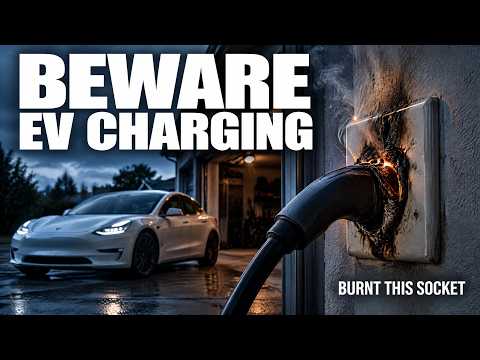
An EV charging burnt wall socket can turn your garage into a fire hazard overnight. This exact failure happened when someone relied on constant plug-and-unplug cycles with the Tesla Mobile Connector.
The Real Danger Behind That Burnt Socket
I’ve seen the photos and they’re scary. The outlet was never designed for daily EV use. It was built for a dryer or washer that stays plugged in for years. When you pull the Tesla Mobile Connector in and out multiple times a week, the prongs loosen, heat builds up, and eventually the plastic melts. That’s the definition of ev outlet fire risk.
Why the Tesla Mobile Connector Is Not a Permanent Solution
The Tesla Mobile Connector is great for travel or temporary charging. It is not built for 24/7 duty cycles at home. The plug and receptacle simply wear out faster than anyone expects. Add in a wire gauge that might be marginal and you have the perfect recipe for the EV charging burnt wall socket problem shown in the video.
Step-by-Step: How to Switch to a Safe Hardwire Install
- Schedule a site visit with a Tesla-authorized electrician who knows local codes and utility rebates.
- Confirm your panel has enough capacity or plan the upgrade while incentives are still available.
- Choose the Tesla Wall Connector for the install. Hardwiring removes the plug entirely.
- Run the proper gauge wire straight to the unit and have the electrician torque every connection to spec.
- Commission the charger, test at full amperage, and register it for the full warranty.
Tesla Wall Connector Benefits You Actually Feel
Hardwiring gives you faster charging speeds because you can pull more amps continuously. It also qualifies for bigger utility rebates in many areas since the charger stays with the house. Most importantly, you eliminate the tesla mobile connector safety issues that lead to burnt sockets.
Pro Tips From Real Installs
- Always ask for the Dennis deal when you contact Smart Plug EV so you get the best pricing and incentive help.
- Have the electrician install a dedicated circuit sized for your future vehicle, not just today’s car.
- Place the Wall Connector at the correct height and angle so the cable reaches both sides of the car without strain.
- Check for any local permit or HOA rules before the crew arrives.
Bottom Line
If you want to avoid the EV charging burnt wall socket nightmare, stop treating the Mobile Connector like a permanent home charger. A professional hardwire tesla wall connector install is the only setup I recommend for daily use. It’s safer, faster, and usually cheaper once you factor in incentives.
Watch the full story here: https://youtube.com/watch?v=LB2mKNICAh8
Smart Plug EV — Tesla-authorized charger installer, ask for the Dennis Deal
Some links are affiliate links that support the channel at no cost to you.