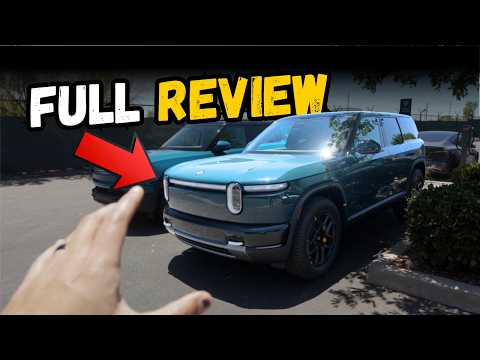
The Rivian R2 sits noticeably higher than a Model Y yet still delivers similar real-world acceleration feel once you account for its extra body weight.
After an early R2 test drive, the biggest takeaway was clear: the Rivian offers genuine strengths in ride height and interior polish, but my Tesla Model Y still wins on overall comfort and autonomy.
First Impressions from the Rivian R2 Test Drive
The R2 immediately feels taller and more commanding from the driver seat. It absorbs bumps with a composed, almost body-on-frame quality that still manages to stay comfortable. The halo steering wheel controls make quick adjustments to mirrors and seating effortless, and the frunk opens automatically with a soft-close tailgate that feels premium.
One standout feature is the rear window that rolls down fully, turning the cargo area into something closer to an open-air experience. The Catalina Cove color looks sharp in person, and the interior materials feel a step above the R1S I’ve driven before.
Rivian R2 vs Model Y Ride and Handling
On the road the R2 feels bigger than its footprint suggests. It weighs more, sits higher, and carries a bit more body roll in sport mode even with moderate suspension settings. My lowered Model Y Performance on Unplugged Performance springs actually felt more planted and quieter at speed once we compared them back-to-back.
Wind and tire noise are lower in the Tesla, and the overall cabin isolation feels tighter. The R2 is no slouch, but the Model Y simply transmits less vibration and road harshness in daily driving.
Autonomy Comparison
The biggest gap showed up when testing driver assistance. Rivian’s Autonomy Plus follows the car ahead on city streets but won’t handle traffic lights or complex intersections yet. On the highway it works well for straight commuting, though sharp curves still require intervention.
Tesla Full Self-Driving, by contrast, manages both city and highway routes without constant oversight. That difference alone is why I’m keeping my Model Y for now. You can read more about the FSD decision in this related post.
Side-by-Side Comparison
| Feature | Rivian R2 | Tesla Model Y |
|---|---|---|
| Ride height | Higher, more SUV-like | Lower, sportier stance |
| Cabin noise | Noticeable road noise | Quieter at highway speeds |
| Autonomy today | Highway strong, city limited | Full city + highway capability |
| Rear window | Rolls down fully | Fixed |
| Frunk | Auto open, generous | Manual, smaller |
| Acceleration feel | Strong but heavier feel | Sharper response |
Who Should Choose the Rivian R2
Pick the R2 if you want higher seating, a rolling rear window, and plan to wait for future autonomy updates. Rivian R2 deliveries begin June 2026, so buyers comfortable with a longer timeline may find it worth the wait.
Who Should Stick with the Model Y
Keep the Model Y if daily autonomy, lower noise levels, and immediate full self-driving capability matter most. The proven software edge and tighter ride make it the clearer daily driver for many owners right now.
Bottom Line
The Rivian R2 is impressive in person and genuinely competitive on comfort and features. After driving both back-to-back, however, the Tesla Model Y still feels like the better all-around package for my needs. I may still order an R2 if timing lines up, but I’m not replacing my current Tesla.
Some links are affiliate links that support the channel at no cost to you.