Do You Need a Home Charger for Your New Tesla? The Good, Better, Best Guide
You've just bought your electric vehicle—maybe a shiny new Tesla Model Y—and now you're wondering: Do I even need a home charger? The short answer? Yes, eventually—but you don't have to rush it. Tesla's Supercharger network has you covered if you're just starting out. In this post, I'll walk you through the charging options from good, better, to best, the steps to take, and how to score some sweet incentives (up to $4,000!). This is based on my hands-on experience testing chargers and real-world installs.
Why Bother with a Home Charger?
Sure, Superchargers are everywhere in most cities, so you're not stranded without one. But for daily convenience, nothing beats plugging in overnight at home. It's cheaper, faster for Level 2 charging, and sets you up for long-term EV ownership. The best part? You can start simple and upgrade as needed.
I recently saw an awesome breakdown from Hallmark's catalog (shoutout to them), and it inspired this good/better/best framework. Let's dive in.
Level 1: Bare Minimum (110V Outlet – "Okay in a Pinch")
What it is: Use the Mobile Connector that comes standard with your Tesla. Plug it into a standard 110V household outlet.
Pros: Zero setup required—every home has these. Better than nothing!
Cons: Painfully slow at about 3 miles of range per hour. Fine for occasional top-ups, but if you drive 50-100 miles daily, you'll hit limits fast. Not sustainable long-term.
Verdict: Emergency use only. Skip if you can.
Level 2: Good Option (NEMA 14-50 Outlet – Dryer Plug)
What it is: A 240V NEMA 14-50 outlet (looks like your electric dryer's plug). Many homes already have one.
Speed: 25-30 miles of range per hour with the Mobile Connector.
Pros: Relatively easy install (electrician check recommended). Decent for moderate driving.
Cons: Not designed for daily EV use. Wrong receptacle? Fire risk (check Bearded Tesla's videos for scary examples). Still plug-and-play, not hardwired.
Verdict: Solid starter if you're renting or testing the waters, but upgrade soon.
Level 3: The Best (Hardwired Wall Connector)
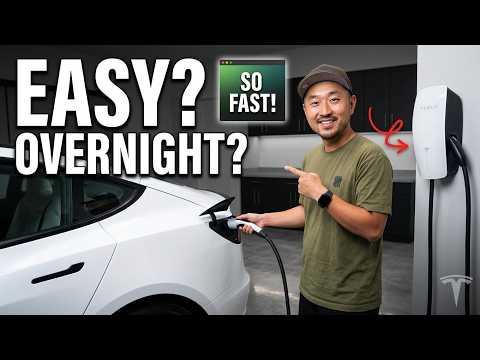
What it is: A dedicated Level 2 wall connector, hardwired at 40-50 amps. My top pick: Tesla's Universal Wall Connector (works with Tesla and non-Tesla EVs, future-proofs for power sharing from your Cybertruck).
Speed: 30-40 miles of range per hour. Full charge overnight!
Pros: Safest, fastest home option. Long-term reliable. Tesla's is rock-solid—I've tested off-brands, and they don't compare.
Deal Alert: Grab a regular Tesla Wall Connector for $400 shipped. DM me on Instagram or check my Linktree.
Pro Tip: Hire a Tesla-authorized installer like Mario at Smart Plug EV (LA/OC area). Why? 4-year warranty, expert incentive hunting, and they've scored me $1,000 back on install + $4,000 for panel upgrades.
Verdict: Go straight here if you own your home. Sustainable, safe, and incentivized.
Incentives: Free Money Waiting for You!
Don't pay full price! Check EVs for All for local rebates—some cover chargers for free. In SoCal? Smart Plug EV's Mario is a wizard at this. Panel too old? Rebates cover upgrades.
My Setup
We started with the standard Tesla Wall Connector (flawless), then upgraded to the Universal for dual plugs and power-sharing potential. Night-and-day difference for daily life.
What’s your setup? 110V holdout, NEMA 14-50, or full wall connector? Drop a comment—I read them all!
Must-Have Tesla Accessories (Because Tesla Ships with ZERO)
Tesla doesn't include basics like a phone mount. Fix that with our partner JOA—I use their gear daily:
- Phone mount: No more flying phones during 0-60.
- Center console organizer: Say goodbye to lost items.
- Invisible under-screen mount: Perfect for sunglasses.
- Bonus: Wireless game controller, portable air compressor, even an electric scooter for Supercharger walks.
Use promo code DENNISCW for savings + free shipping over $120. Links in bio/description. Thanks, JOA!
Ready to level up your charging? Hit that DM or check the links. Drive safe! 🚀
DennisCW – Helping you go electric, smarter.