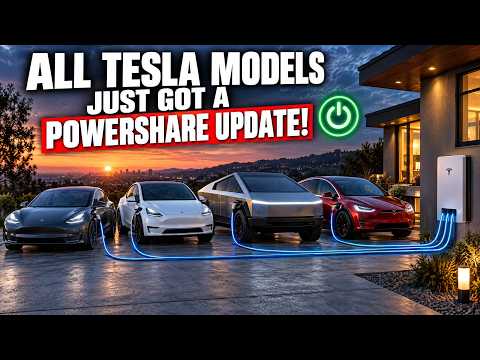
Tesla just enabled the Tesla PowerShare update all models, turning every vehicle into a potential home backup source.
The Big Announcement
All Tesla models now include Tesla vehicle to home PowerShare as standard. Only the Cybertruck can deliver this standalone. Every other model needs a Powerwall to unlock Tesla Powerwall V2H backup.
What It Means for Owners
A Model Y holds roughly 80 kWh—equivalent to six or eight Powerwalls. Pair it with a Powerwall 3 and you get seamless Tesla Model Y Powerwall 3 integration for whole-home backup. I tested the Cybertruck version and noticed a few-second delay; adding a Powerwall 3 removes that lag entirely.
How to Check Tesla PowerShare Software
Open your car’s software screen, tap Additional Information, and look for the PowerShare Support toggle. If it appears, your Model 3 or Model Y built after October 1, 2026 already supports it.
I covered similar energy setups in my post about the Texas Powerwall deal. The same logic applies here—home integration beats standalone vehicle use.
Real-World Setup
I asked my electrician at Smart Plug EV — Tesla-authorized charger installer, ask for the Dennis Deal the best path forward. His answer was clear: Powerwall 3 every time. It keeps your home tied to the car without extra hardware headaches.
Bottom Line
The Tesla PowerShare update all models is a genuine step toward true vehicle-to-home capability. Owners who already plan to add storage should move on a Powerwall 3 now so the feature works the moment their car receives the software push.
Some links are affiliate links that support the channel at no cost to you.